From suddenly itchy skin to aching joints and a brain that just won’t think, some of the changes we put down to getting older may actually be connected to perimenopause.
When people talk about perimenopause, we all know the usual ones.
- Hot sweats.
- Periods changing.
- Mood swings.
- Maybe putting on weight.
But what about the things that happen to your body that you don’t connect with perimenopause at all?
Because that was me.
For years, different things were happening and I had perfectly reasonable explanations for them.
- My joints hurt because I was getting older.
- I couldn’t think properly because I was busy and had too much going on.
- I wasn’t sleeping because apparently I’d just become rubbish at sleeping.
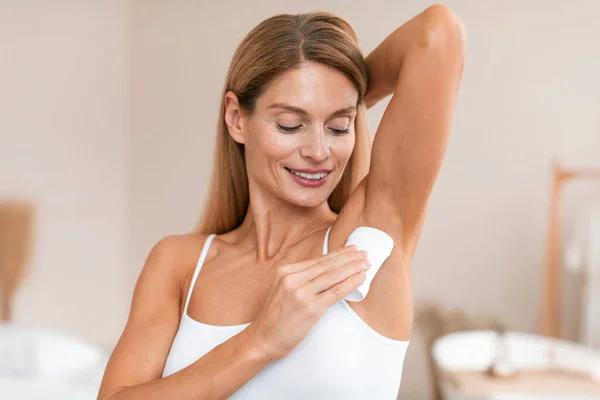
- And then there was the fact that my skin suddenly couldn’t tolerate deodorant anymore.
None of those things screamed PERIMENOPAUSE to me.
But once I started looking at what was happening in my body as a whole, rather than treating every little thing as a completely separate problem, things started to make a lot more sense.
And when I went digging into the research, I discovered I’m certainly not the only woman experiencing some of these things.
So here are five changes you might never have connected with perimenopause
1. Why has my skin suddenly started hating things I’ve always used?
This was a big one for me.
Deodorant.
Even when I was using natural deodorants, my underarms would itch like mad.
I’d used deodorant for years, obviously 😂, but suddenly my skin just didn’t want to tolerate it.
It became so irritating that eventually I thought, bugger this, and made my own.
At the time, I didn’t think:
“I wonder whether this could have anything to do with perimenopause?”
Why would I?
But there’s actually a biological reason why our skin can change as our hormones change.
Oestrogen receptors are found in the skin, and research shows that changing oestrogen levels can affect things including skin hydration, collagen and skin barrier function.
Menopause and oestrogen deficiency have also been associated with increased dryness and changes to the structure of the skin.
READ THE RESEARCH:
Research on oestrogen and itch/skin changes in women – PubMed
That doesn’t mean perimenopause suddenly made me allergic to deodorant. And I certainly can’t prove hormones were responsible for what happened to me.
But knowing what we now know about oestrogen and the skin, I find it fascinating that my skin suddenly became so much more reactive at around the same stage of my life.
And here’s another interesting thing from my own experience.
Since taking my Wild Woman Blend, I’ve found I can use that deodorant again without the same problem.
Can I tell you Wild Woman caused that change?
No.
It’s simply something I’ve noticed in my own body.
But it’s one of those little pieces of my perimenopause puzzle that makes a lot more sense to me now.
2. Why do I suddenly feel about 97?
This one I had heard women talk about.
But I didn’t necessarily realise what was happening to me at first.
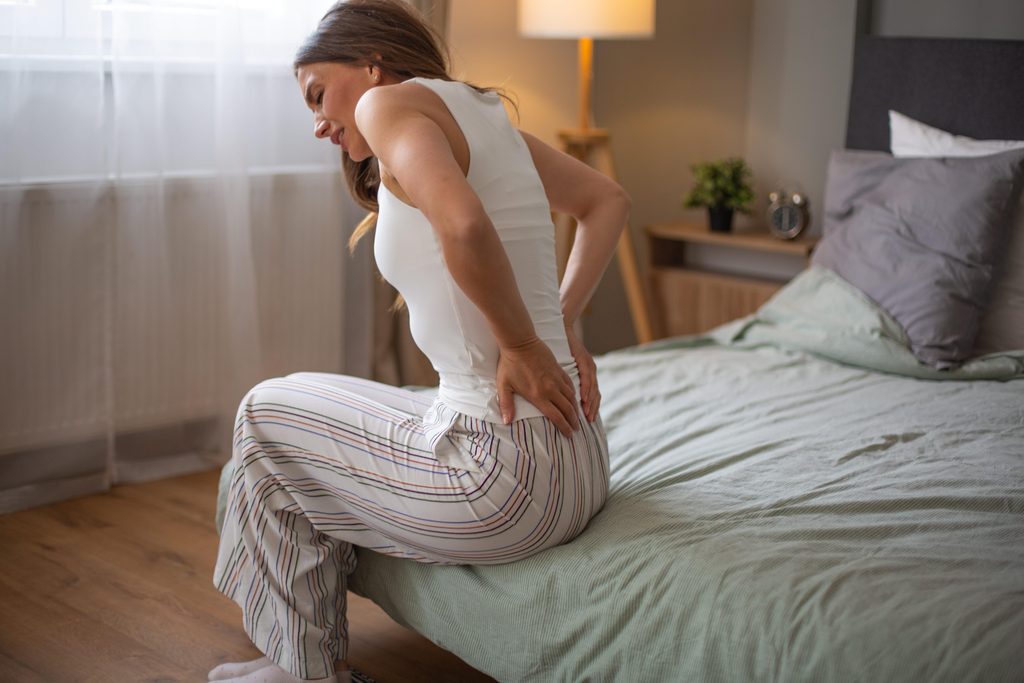
You get out of bed and everything aches.
Your joints hurt.
You’re stiff.
Things that didn’t used to complain suddenly have a lot to say for themselves.
And what’s the obvious explanation?
I’m getting older.
That’s what I thought.
Except there’s now some pretty compelling research around musculoskeletal pain and the menopause transition.
A 2026 systematic review and meta analysis looked at 37 observational studies involving more than 93,000 women.
Around 40% of premenopausal women in the included studies experienced muscle or joint pain.
Among perimenopausal women it was 57%.
The researchers calculated that perimenopausal women had around a 35% higher relative risk of muscle or joint pain than premenopausal women.
Importantly, these were observational studies, so they show an association rather than proving that perimenopause caused every ache and pain.
READ THE RESEARCH:
2026 systematic review and meta analysis – PubMed
An earlier systematic review also found musculoskeletal pain was extremely common during perimenopause.
Earlier systematic review of musculoskeletal pain during the menopausal transition – PubMed
And this is something I think women need to hear.
Because if you’re in your 40s and suddenly everything hurts, it’s incredibly easy to shrug your shoulders and think:
“Well, this is getting older then.”
It might not be quite that simple.
3. Why can’t my brain just THINK?
“Brain fog” sounds almost cute.
What I’ve experienced doesn’t always feel cute.
It’s walking into a room and having absolutely no idea why you’re there.
Losing the word you were about to say.
Trying to hold onto a thought and it’s just… gone.
Not being able to concentrate.
Having a brain full of things and somehow simultaneously being unable to think properly about any of them.
And perhaps wondering:
What on earth is happening to my brain?
This isn’t simply something women have invented on Facebook.
A systematic review and meta analysis published in 2026 looked at 26 studies involving 9,428 participants.
It found that cognitive concerns such as forgetfulness and difficulty concentrating are frequently reported during perimenopause.
Overall, perimenopausal women showed poorer cognitive outcomes than premenopausal women, although the researchers also found important differences depending on how menopause stages were defined and how cognition was measured.
READ THE RESEARCH:
2026 systematic review of cognition during the menopause transition – PubMed
Another systematic review found relationships between cognition and other menopausal experiences including sleep, vasomotor symptoms and mood.
In other words, it’s complicated.
There probably isn’t one little hormonal switch responsible for everything.
MORE RESEARCH:
Systematic review of cognition during menopause – PubMed
But we don’t have to pretend science has every answer to acknowledge that women are reporting real changes in the way their brains feel and function during perimenopause.
If you’ve ever sat staring at something you KNOW you know and wondered where your brain has gone…
You’re definitely not the only one.
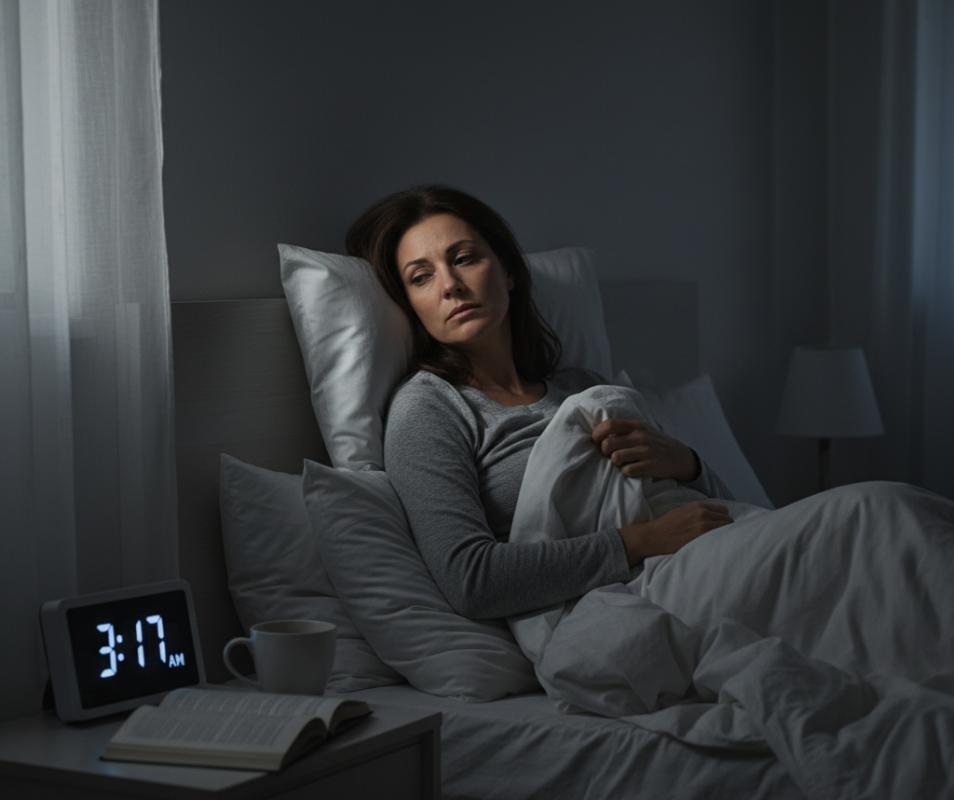
4. Why am I awake AGAIN?
Maybe you’ve always slept brilliantly.
Then suddenly you’re waking up in the middle of the night.
Or you can’t get to sleep.
Or you’re waking repeatedly.
Or your eyes ping open at some ridiculous hour and your brain decides:
Excellent. Now seems like the perfect time to think about every decision I’ve made since 1997.
😂
Sleep disturbance is very well recognised around the menopause transition.
A systematic review examining ovarian hormones and perimenopausal sleep disturbances included 86 studies.
It found evidence that changes in oestrogen and progesterone may contribute to sleep disturbances both directly and indirectly, including through things such as hot sweats and night sweats.
READ THE RESEARCH:
Systematic review of ovarian hormones and sleep during perimenopause – PubMed
And a huge 2026 systematic review and meta analysis pooled data from 102 studies involving more than 1.1 million women and found insomnia symptoms were common among both perimenopausal and postmenopausal women.
2026 systematic review and meta analysis – PubMed
And of course poor sleep doesn’t stay in the bedroom.
If you’ve been awake half the night, is it any wonder you can’t concentrate the next day, feel shattered by 4pm or have considerably less patience with everybody?
Which is another reason I don’t think we should always look at perimenopause symptoms individually.
They’re connected.
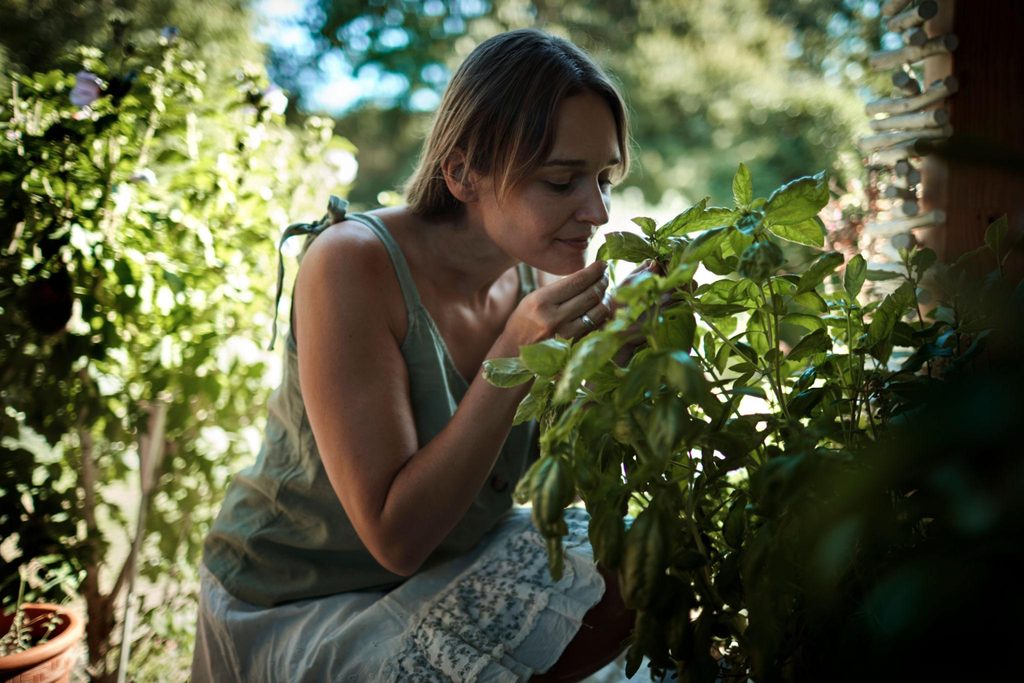
5. Why do things suddenly taste or smell different?
This one isn’t something I’ve personally experienced in the same way.
But I have heard women talk about it.
Something doesn’t taste the way it used to.
A smell they previously liked suddenly seems overpowering.
Food tastes different.
And when women started mentioning it, I wondered whether there was actually any evidence behind it.
There is some.
But this is one where I think we need to be particularly careful not to make the science sound more certain than it is.
Small studies have found differences in taste perception between women before and after menopause, particularly around sweetness.
READ THE RESEARCH:
Research into taste perception after menopause – PubMed
Study comparing taste intensity before and after menopause – PubMed
Research involving perimenopausal women has also found oral sensory complaints, including taste disturbances, occurring alongside menopausal symptoms.
Research into oral sensory complaints during perimenopause – PubMed
But these studies are small.
So there’s enough here for researchers to be interested, but unlike some of the other things in this blog, I don’t think there’s enough evidence for me to confidently tell you:
“Perimenopause makes your taste and smell change.”
What I can say is:
Women are reporting it, researchers have found some interesting differences, and we need much better research to understand exactly what’s happening.
Maybe we need to stop looking at each symptom separately
This is probably the biggest thing I’ve learnt from my own experience of perimenopause.
I didn’t wake up one morning with a giant flashing sign over my head saying:
WELCOME TO PERIMENOPAUSE.
😂
Things happened gradually.
Hot sweats.
Aching.
My sleep changed.
My brain didn’t feel the same.
My mood changed.
My skin started reacting to things.
And individually, I could find another explanation for practically every one of them.
That’s why joining the dots matters.
Oestrogen isn’t simply involved in periods and reproduction.
Oestrogen receptors and signalling are found in tissues throughout our bodies, including the skin and brain.
READ MORE:
Research review on oestrogen receptors throughout the body – PubMed
That doesn’t mean every ache, itch, sleepless night or forgotten word after 40 is perimenopause.
There can be lots of reasons for all of these things.
But perhaps we need to stop automatically dismissing every change as:
“I’m just getting older.”
Because sometimes when you put all the little pieces together, you get a very different picture.
So what have I done for myself?
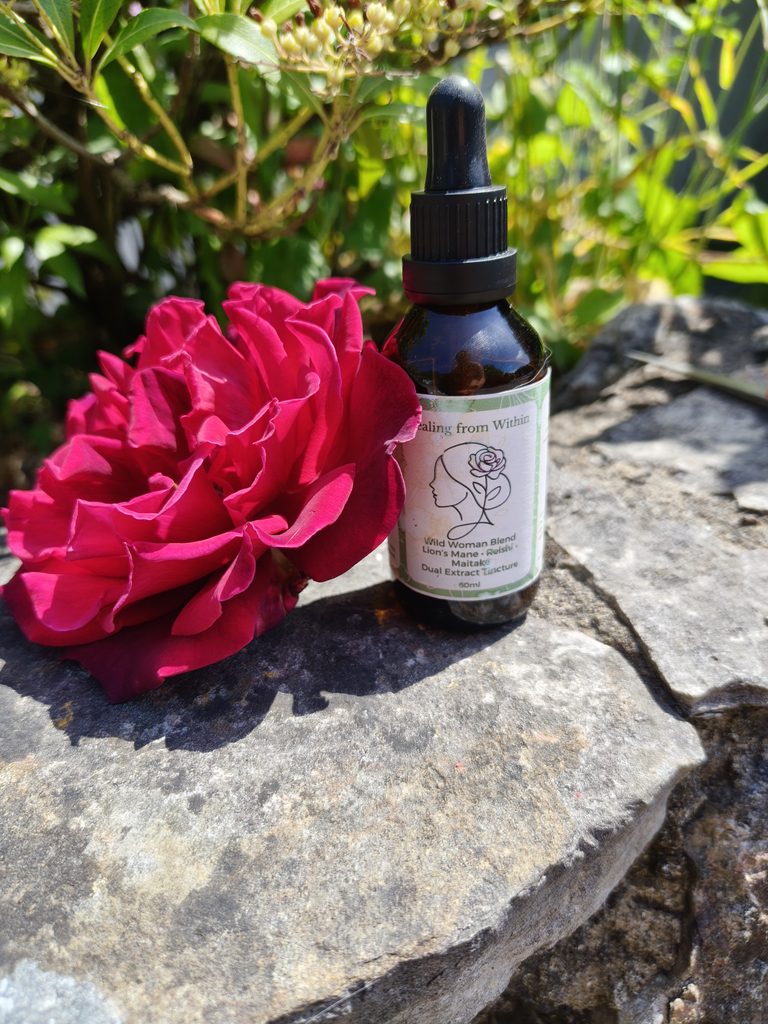
This whole experience is part of why I’ve become so fascinated by mushrooms and why I created products for women going through this stage of life.
My Wild Woman Blend contains Lion’s Mane, Reishi and Maitake mushrooms and it’s now part of my own daily routine.
I’m deliberately saying my experience here.
I’m not claiming three mushrooms treat perimenopause, cure insomnia or magically sort out your hormones.
But Wild Woman has become part of how I support myself through this stage of my life.
And many of the conversations I now have with other women start because they’re experiencing some of the same things I was.
Sometimes the first thing we need is simply to realise:
Hang on. It’s not just me.
And the more we talk about what perimenopause can actually look and feel like, the fewer women will spend years wondering:
“What the hell is happening to me?”
Which one surprised you?
I’d love to know.
Which of these did you have absolutely NO idea could be connected with perimenopause?
Or perhaps you’ve experienced something else that took you years to connect with changing hormones.
Come and tell me.
And if you’d like to know more about the Wild Woman Blend I use myself, you can find it here.